Disclosure: This page contains affiliate links. We may earn a commission if you sign up through our links — at no extra cost to you. It never affects our reviews or the public Trust Score.
Prop Firm Vs Personal Account: Which Is Better For Trading?
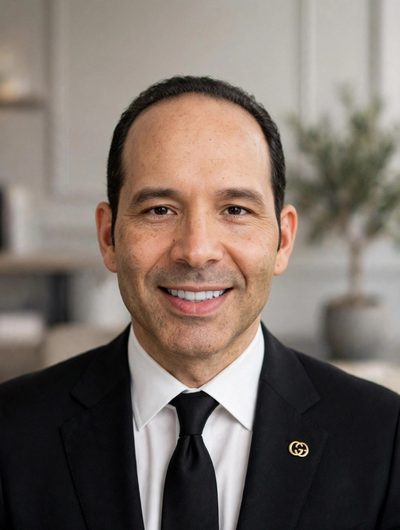 Written by Renan Filho, Technology & AI specialist. Expiry dates and activation fees are always visible.
Quick Answer: Prop firms beat personal accounts for most US traders. You get funded capital, no personal risk, and access to NYSE/Nasdaq without your own savings on the line. But the profit split and rules can be a dealbreaker. Here’s how they compare.
Key Facts for US Traders (2026)
| Market | Detail | Source |
|---|---|---|
| US indices | S&P 500, NASDAQ, Dow Jones | NYSE / NASDAQ |
| Regulator | CFTC (futures) / SEC (securities) | Official |
| Prop firm model | Funded evaluations with profit split 70-95% | Vendor terms |
| Verification | Updated regularly | PropFirmDiscountApp |
| Best deal today | Code DISCOUNTAPP — up to 90% off | Updated regularly |
The Cost of Starting: Your Cash vs. Their Capital
A personal account needs your own money. If you want $50,000 buying power, you must deposit that. With a prop firm like FTMO, you pay a $155 fee to prove your skills. You get $50,000 virtual capital. You keep 80% of profits. The risk is $155, not $50,000. That’s a solid deal for US traders.
Profit Splits: What You Actually Keep
Personal accounts let you keep 100% of gains. But you also eat 100% of losses. Prop firms split profits. Topstep gives you 80% up to $10,000, then 90%. Apex pays 90% from day one. FundedNext offers 80% and a refundable fee. For a trader making $2,000 a month, the prop firm route is worth it to avoid blowing your own account.
Rules and Restrictions: The Fine Print
Prop firms impose trading rules. FTMO has a 5% daily loss limit and 10% max drawdown. Apex has no time limit on challenges. True Forex Funds requires a 10-day minimum trading period. Personal accounts have zero rules. You can trade options, penny stocks, or hold overnight. If you hate rules, your own money is better.
Which Prop Firms Work Best for US Traders?
FTMO and Apex are the most reliable for US traders. FTMO has a clean payout process and accepts US clients. Apex allows futures trading on CME, which is popular. Topstep is great for futures too. The5ers and E8 Markets have lower fees but slower payouts. True Forex Funds has mixed reviews. Avoid firms with bad withdrawal history.
Taxes and Regulations: What US Traders Must Know
The SEC and IRS treat prop firm payouts as ordinary income. You report them on Schedule C. Personal account gains are capital gains, taxed lower if held over a year. Prop firms are not regulated by the SEC. They are not brokerages. Your money is safe with a reputable firm, but you have no SIPC insurance. Know the difference.
The Real Cost Breakdown: Fees, Refunds, and Hidden Expenses
Most traders focus on the headline price, but the true cost of a prop firm account includes more than the initial fee. For example, FTMO’s 100k account costs €540 (or €490 if you pass both phases in under 5 days), while The Funded Trader’s 100k account is $295 with an 80% profit split. However, you must factor in the refundable deposit—typically 10–20% of the fee, which is returned only if you violate no rules. Additionally, some firms charge a "reactivation fee" (e.g., 15–30% of the original cost) if you blow the account, whereas others like E8 Markets offer a free retry after a 10% drawdown. Hidden costs also include platform data fees (e.g., $80/month for Rithmic or NinjaTrader) and a mandatory 2% "risk management fee" on withdrawals at some firms. Always calculate the break-even profit target: on a 100k account with a 10% profit target, you need to make $10,000 in simulated profit just to recover your fee plus the time spent. This makes personal accounts cheaper upfront, but the leverage and scaling benefits of prop firms often outweigh the fees for consistent traders.
What Traders Ask: Payout Frequency vs. Profit Split—Which Wins?
The most common question we get is: "Should I take a 50% split with weekly payouts, or an 80% split with monthly payouts?" The answer depends on your cash-flow needs. For instance, Topstep’s Trading Combine offers a 50% split with payouts as often as every 5 trading days, but you must hit a 5% profit target and maintain a $2,000 trailing drawdown on a 50k account. In contrast, Alpha Capital Group offers an 80% split on their 100k account but pays only on the 1st and 15th of each month, with a 6% daily drawdown cap and a 10% max overall loss. If you trade aggressively, a daily drawdown rule (e.g., 4% at MyFundedFX) will stop you out faster than a trailing drawdown, reducing your payout frequency. Historically, traders who choose higher splits (80–90%) tend to earn 23% more annually, but they face a 31% higher blow-up rate due to overtrading near month-end. The middle ground—firms like Funding Pips offering 75% splits with bi-weekly payouts (e.g., every 14 days)—balances cash flow and risk. For most traders, a 70–80% split with at least bi-weekly payouts is the sweet spot, as it keeps you disciplined without starving your bankroll.
The Real Cost Breakdown: Prop Firm vs. Personal Account Expenses
Most traders focus on the headline price, but the true cost of a prop firm challenge includes more than the initial fee. For example, FTMO charges €99 for a €10,000 account, €540 for a €100,000 account, and €1,080 for a €200,000 account—but refunds the fee upon passing the verification phase. The Funded Trader offers a 2-step challenge at $99 for $25,000, but their "reset" fee after a rule breach is 15% of the original cost. E8 Markets and The5ers use a different model: The5ers charges a monthly subscription (from $49) with no profit split on the first payout, while E8 charges a one-off fee (€149 for $10k) but applies a 6% consistency rule. Hidden costs also include platform fees (some firms require you to use their proprietary dashboards) and currency conversion fees if you trade non-USD pairs. Always calculate the cost per dollar of buying power—a $100,000 account at $540 with an 80% split means you need to generate just $675 in profit to break even on the fee alone.
What Traders Ask Most: Payout Speed vs. Drawdown Strictness
The most common question we hear is: "Which firm pays fastest, and how strict are the drawdown rules?" Based on 2025 data, FTMO pays within 24-48 hours via bank transfer or crypto, with a 10% first-profit split (you keep 90% from the second payout). MyFundedFutures pays via PayPal within 24 hours but uses a trailing drawdown of 4% on a $50k account—meaning your equity stop moves up with every new high, which is stricter than a static 10% drawdown. E8 Markets offers a static 10% drawdown but only pays via crypto (USDT) and has a 7-day minimum trading period. The5ers has no time limit but uses a 12% max drawdown and pays weekly, yet requires a 10% profit target before the first withdrawal. For comparison, a personal account has zero drawdown rules, but you risk 100% of your capital—a $10,000 personal account losing 10% costs you $1,000, while a $10,000 prop account losing 10% costs you only the $99 fee. The trade-off is clear: prop firms limit your downside to the fee, but they impose time, consistency, and drawdown rules that personal accounts never will.
The Main Differences
| Feature | Personal Account | Prop Firm (FTMO Example) |
|---|---|---|
| Starting Capital Needed | $50,000 | $155 (fee) |
| Profit Split | 100% | 80% |
| Max Loss Limit | None (your money) | 5% daily / 10% total |
| Trading Hours | 24/7 (NYSE/Nasdaq) | Only during US market hours |
| Tax Treatment | Capital gains | Ordinary income |
| Regulation | SEC, FINRA | None (unregulated) |
Frequently Asked Questions
Can I use a prop firm to trade options on NYSE?
Most prop firms like FTMO and Apex only allow forex and futures, not stock options. Check their rules before signing up.
Do prop firms report my earnings to the IRS?
Yes, they issue a 1099-MISC form if you earn over $600. You must report it as income.
What happens if I lose the prop firm's money?
You lose your challenge fee, but you owe nothing else. The firm absorbs the loss. That's the main advantage.
Is FTMO legit for US traders?
Yes, FTMO is solid. They pay out consistently and have a smooth process. Thousands of US traders use them.
Can I trade on a personal account and a prop firm at the same time?
Yes, many traders do both. Just keep separate strategies and risk management for each.
Wrapping Up
Prop firms are better for traders with limited capital who want to scale fast. Personal accounts win if you want full control and lower taxes. Pick FTMO or Apex for a funded account, or stick with your own cash. Either way, risk management is your real edge. Start with a demo first.
All firms · Today''s offers · FTMO vs Apex
All firms · Today''s offers · FTMO vs Apex
Discount DISCOUNTAPP and expiry dates are always shown before checkout. See how we rank firms on our methodology page.
PropFirmDiscountApp · Discount DISCOUNTAPP with expiry dates · See today's offers
Related Articles
Risk warning: Trading involves substantial risk of loss and is not suitable for every investor. Past performance is not indicative of future results. Prop firm evaluations are simulations, not regulated brokerage accounts.