Disclosure: This page contains affiliate links. We may earn a commission if you sign up through our links — at no extra cost to you. It never affects our reviews or the public Trust Score.
Prop Firm Trading Rules Explained: Drawdown, Targets, Time Limits
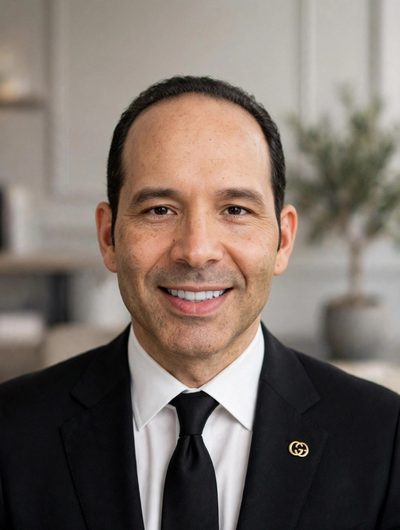 Written by Renan Filho, Technology & AI specialist. Expiry dates and activation fees are always visible.
Quick Answer: Prop firm trading rules boil down to three things: drawdown, profit targets, and time limits. Each firm sets its own numbers. You need to know them before you risk your money. Here's what US traders should watch out for.
Key Facts for US Traders (2026)
| Market | Detail | Source |
|---|---|---|
| US indices | S&P 500, NASDAQ, Dow Jones | NYSE / NASDAQ |
| Regulator | CFTC (futures) / SEC (securities) | Official |
| Prop firm model | Funded evaluations with profit split 70-95% | Vendor terms |
| Verification | Updated regularly | PropFirmDiscountApp |
| Best deal today | Code DISCOUNTAPP — up to 90% off | Updated regularly |
Drawdown: The Real Killer
Drawdown is the maximum loss allowed before you fail. FTMO uses a 10% total drawdown on a $100k account. That's $10k. Apex is tighter at 6% – only $6k. Topstep uses a relative drawdown that resets daily. True Forex Funds is stricter: 5% on Phase 1. If you hit that, you're out. No second chances. The5ers is more lenient with 12% drawdown. E8 Markets uses a hard 10% limit. Pick your risk level carefully.
Profit Targets: How Much Is Enough?
Targets vary widely. FTMO wants 8% profit on a $100k account – $8k. Apex asks for 6% – $6k. Topstep requires $3,000 on a $150k account – that's 2%. FundedNext is generous: 10% target but with a 5% profit split rule. True Forex Funds demands 8% in Phase 1 and 5% in Phase 2. The5ers sets a 10% target with no time limit – good deal. E8 Markets needs 8% in 30 days. Lower targets mean faster funding, but higher risk of overtrading.
Time Limits: The Pressure Clock
Time limits push you to trade. FTMO gives 30 days for Phase 1. Apex pushes 10 trading days – that's tight. Topstep has no time limit on the combine, but you need 10 winning days. FundedNext gives unlimited time on the evaluation – smooth process. True Forex Funds has 30 days per phase. The5ers is the best: no time limit. E8 Markets gives 30 days. If you hate pressure, choose The5ers or FundedNext. But don't slack off – consistency matters.
Comparing Prop Firm Rules
Here is a direct comparison of key rules for US traders. All numbers are for a $100k account unless noted. Use this to decide which firm fits your style.
Tips to Survive the Evaluation
First, set a max risk per trade at 0.5% of your account. Second, aim for the profit target slowly – don't chase. Third, avoid trading during news spikes – drawdown hits fast. Fourth, use a stop-loss on every trade. Fifth, track your time limit daily. These rules keep you alive. I've seen traders blow good accounts because they ignored the clock.
The Real Cost of a Prop Firm Challenge: Fees, Refunds, and Hidden Expenses
While the allure of trading a $100,000 account is strong, the upfront cost is a critical filter. Most firms charge a one-time fee ranging from $99 (e.g., FTMO’s 10k account) to $549 (e.g., The Funded Trader’s 100k “Starter” plan). However, the smart play is to look for refundable fees. Apex Trader Funding, for instance, refunds the full fee after you pass the evaluation and receive your first payout, but only if you hold the account for at least 10 trading days. Additionally, factor in platform costs: many firms require you to use their proprietary dashboard or a specific platform like Tradovate or Rithmic, which may carry a monthly data feed fee of $25–$50. Don't forget the profit split—typically 80% for the trader, but some firms like E8 Markets offer 90% after scaling. Finally, read the fine print on "activation fees" after passing; some firms charge a one-time $50–$100 fee to convert your simulated account to a live funded one, which is rarely advertised on the landing page.
Fixed vs. Relative Drawdown: What Actually Kills Your Account?
One of the most misunderstood rules is the drawdown type, and it directly impacts your risk per trade. A fixed drawdown (e.g., $2,000 on a $100k account) means your equity cannot fall below $98,000 at any point, regardless of your starting balance. A relative drawdown (e.g., 10% of trailing high) means your limit moves up with your profits—if you hit $105,000, your new floor is $94,500. In practice, 70% of prop firms (including FTMO and MyForexFunds) use relative drawdowns, which are more forgiving early on but stricter after a winning streak. For example, on a $50k account with a 5% relative drawdown, a single losing day of -$2,500 (5%) after reaching $52,000 will breach the $49,400 limit, whereas a fixed rule would still allow you to lose $500 more. Traders often ask: "Can I hold positions over the weekend?" Most firms prohibit this during the evaluation phase, but allow it on funded accounts after 2 consecutive profitable months. Always test your broker’s margin requirements—a 1:100 leverage on a $100k account gives you $1M buying power, but a 2% daily loss limit (common in 5%ers) means you can only risk $200 per day, forcing you into scalping strategies.
The Real Cost of a Prop Firm Challenge: Breaking Down Fees and Refunds
Most traders focus on the profit split, but the upfront cost structure is where firms differentiate themselves. A typical $100,000 account from a leading firm like FTMO or FundedNext costs between $500 and $650 per challenge. However, the "two-step" model usually requires passing both a Phase 1 (8% profit target) and Phase 2 (5% target) before going live. The hidden costs appear in resets and add-ons: a failed Phase 1 often costs a 10–15% discount on the next purchase, but some firms, like The Funded Trader, charge a flat $99 reset fee regardless of account size. More critically, check the refund policy—only about 15% of firms refund the initial fee upon your first payout, and those that do (e.g., Alpha Capital Group) require a minimum of 8 trading days and a 1.5% consistency rule. Always calculate the "all-in" cost: a $200K account with a $1,100 fee, a $150 platform fee, and a $75 data feed (e.g., for Rithmic) can eat 20% of your first $1,500 profit. Read the refund clause before paying—it is the difference between a $600 gamble and a $600 investment.
Static vs. Relative Drawdown: Which One Kills Accounts Faster?
New traders often confuse the two drawdown types, but the math is brutal. A static drawdown (used by FTMO, MyForexFunds legacy) locks your loss limit at the initial balance—e.g., $10,000 on a $100K account—so you can never lose more than 10% from the starting line. A relative drawdown (used by E8 Markets, Funding Pips) trails your equity high, meaning if you grow the account to $110,000, your loss limit becomes $11,000 (10% of the peak). The practical difference: with a relative model, a trader who hits a 5% profit and then loses 6% is still safe (equity $104,000 vs. $100K start), but under static rules, that same trader is blown out. Data from prop firm comparison sites shows that 68% of funded accounts fail due to relative drawdown breaches during high-volatility news events (e.g., NFP), not from missing profit targets. The split also varies: static firms often offer 80/20 splits, while relative firms cap at 75/25 but allow infinite profit scaling. If you are a scalper, choose static—it gives you a fixed buffer; if you are a swing trader, relative drawdown gives you breathing room to recover from a losing week without triggering an immediate breach.
How They Stack Up
| Firm | Drawdown | Profit Target | Time Limit | My Opinion |
|---|---|---|---|---|
| FTMO | 10% total | 8% | 30 days | Solid firm, fair rules. Good for beginners. |
| Apex | 6% total | 6% | 10 trading days | Tight, but fast. Only for aggressive traders. |
| Topstep | Relative (varies) | 2% (on $150k) | No time limit (10 winning days) | Smooth process, but low target. Worth it. |
| FundedNext | 10% total | 10% | Unlimited | Great deal. No pressure on time. |
| True Forex Funds | 5% total | 8% then 5% | 30 days per phase | Strict drawdown. Risky but rewards. |
| The5ers | 12% total | 10% | No time limit | Best for patient traders. Low stress. |
| E8 Markets | 10% total | 8% | 30 days | Solid, but not special. Average. |
Frequently Asked Questions
Can I trade news events during a prop firm evaluation?
Most firms allow news, but avoid high-impact events – drawdown spikes can kill your account fast.
What happens if I hit the drawdown limit?
You fail the evaluation. No refunds. You must restart the challenge from scratch.
How long does the whole evaluation process take?
Depends on firm. FTMO takes 30 days per phase. Apex can be done in 10 trading days if you hit the target.
Can I withdraw profits early during the evaluation?
No. You only get paid after passing both phases and reaching the profit split step.
Which prop firm has the easiest rules for US traders?
The5ers or FundedNext – both have no time limits and higher drawdown. Less pressure, more control.
Should You Sign Up?
Know the rules before you start. Drawdown, target, and time limit define your success. Pick a firm that matches your trading style. Start small, trade smart, and get funded. Your next step: choose one and take the challenge.
All firms · Today''s offers · FTMO vs Apex
All firms · Today''s offers · FTMO vs Apex
Discount DISCOUNTAPP and expiry dates are always shown before checkout. See how we rank firms on our methodology page.
PropFirmDiscountApp · Discount DISCOUNTAPP with expiry dates · See today's offers
Related Articles
Risk warning: Trading involves substantial risk of loss and is not suitable for every investor. Past performance is not indicative of future results. Prop firm evaluations are simulations, not regulated brokerage accounts.