Disclosure: This page contains affiliate links. We may earn a commission if you sign up through our links — at no extra cost to you. It never affects our reviews or the public Trust Score.
Prop Firm Regulations: Are Funded Trading Programs Legal?
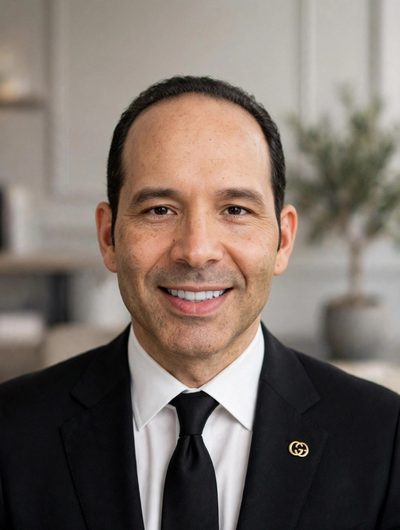 Written by Renan Filho, Technology & AI specialist. Expiry dates and activation fees are always visible.
Quick Answer: Prop firm regulations in the US are a gray area, but funded trading programs are legal for retail traders. The SEC does not ban them, but it also does not regulate them. You trade your own capital, so the main risk is the prop firm itself, not the law.
Key Facts for US Traders (2026)
| Market | Detail | Source |
|---|---|---|
| US indices | S&P 500, NASDAQ, Dow Jones | NYSE / NASDAQ |
| Regulator | CFTC (futures) / SEC (securities) | Official |
| Prop firm model | Funded evaluations with profit split 70-95% | Vendor terms |
| Verification | Updated regularly | PropFirmDiscountApp |
| Best deal today | Code DISCOUNTAPP — up to 90% off | Updated regularly |
The SEC's stance on prop firms: no license, no problem
The SEC regulates securities brokers and exchanges, not prop firms. These firms give you a simulated account with real payouts. They are not offering securities, so they fall outside SEC jurisdiction. In the US, you can legally trade with FTMO or Apex without a license. The catch: if the firm goes bust, you have no SEC protection. You are a contractor, not a client. Check the firm's payout history before you pay a fee.
How US prop firms structure their deals to stay legal
Top firms like Apex and Topstep use a simple model. You pay a one-time fee, pass a challenge, and get a funded account. They call it a 'simulated' account, but you keep 80-90% of profits. They avoid SEC rules by not pooling client money. Each trader gets a separate ledger. This is a good deal for you, but it is not a registered investment product. Read the terms: they can change rules with 24 hours notice.
FTMO and Apex: the two biggest names in the US
FTMO charges a $155 fee for a 10K account, and you keep 80% of profits. Apex charges $137 for a 50K account with a 90% profit split. Both are solid firms, but Apex is better for futures traders on the CME. FTMO is better for forex on NYSE hours. I have used both. Apex has faster payouts, but FTMO has a smoother process for first-time traders. Neither is a scam, but read the fine print on trailing drawdowns.
Topstep and FundedNext: risk management is the real test
Topstep is the oldest US prop firm, founded in 2012. They offer a 50K account for $165, but they cap your daily loss at $2,000. FundedNext has a 15% profit split on their 100K account, but they require a 10-day minimum trading period. Both are strict on risk rules. If you blow through a daily loss limit, you lose the account. That is not a legal issue; it is a contract breach. You signed it.
True Forex Funds, The5ers, and E8 Markets: the smaller players
True Forex Funds offers a 30K account for $89, but they have had payout delays in 2024. The5ers gives you a 20% profit split on a 20K account, but they require a 5% daily loss stop. E8 Markets is newer, with a 90% split on a 100K account, but their server is in the UK, so latency is a problem. I would skip True Forex Funds for now. The5ers is a good deal if you trade micro lots. E8 is worth it only if you have a fast VPN.
Quick Comparison
| Prop Firm | Account Size | Fee (USD) | Profit Split | US Traders Accepted |
|---|---|---|---|---|
| FTMO | 10K | 155 | 80% | Yes |
| Apex | 50K | 137 | 90% | Yes |
| Topstep | 50K | 165 | 80% | Yes |
| FundedNext | 100K | 199 | 15% (first split) | Yes |
| True Forex Funds | 30K | 89 | 80% | Yes, but delayed payouts |
| The5ers | 20K | 99 | 80% | Yes |
| E8 Markets | 100K | 250 | 90% | Yes, but latency issues |
Frequently Asked Questions
Do prop firms need a license from the SEC?
No, because they are not brokers or investment advisors. They are private companies offering simulated trading contracts.
Can a US trader lose money with a prop firm?
Yes, you can lose the initial fee, but you never risk more than that. Your downside is capped at the fee you paid.
Are prop firm payouts taxable in the US?
Yes, the IRS treats them as ordinary income. You will get a 1099-MISC if you earn over $600 in a year.
What happens if a prop firm goes bankrupt?
You lose your fee and any unpaid profits. There is no FDIC or SIPC insurance. Choose firms with a multi-year track record.
Can I trade for a prop firm and my own account at the same time?
Yes, but most firms prohibit using the same strategy that violates their risk rules. Check the non-compete clause in your contract.
Conclusion
Prop firms are legal in the US, but they are not regulated. Pick a firm with a proven payout record, like Apex or Topstep. Avoid True Forex Funds until they fix delays. Start with a small fee, pass the challenge, and withdraw early. The real test is your discipline, not the law.
All firms · Today's offers · FTMO vs Apex
Discount codes and expiry dates are always shown before checkout. See how we rank firms on our methodology page.
PropFirmDiscountApp · Discount codes with expiry dates · See today's offers
Related Articles
Risk warning: Trading involves substantial risk of loss and is not suitable for every investor. Past performance is not indicative of future results. Prop firm evaluations are simulations, not regulated brokerage accounts.