Disclosure: This page contains affiliate links. We may earn a commission if you sign up through our links — at no extra cost to you. It never affects our reviews or the public Trust Score.
Prop Firm Beginners Guide: How To Start Your Funded Trading
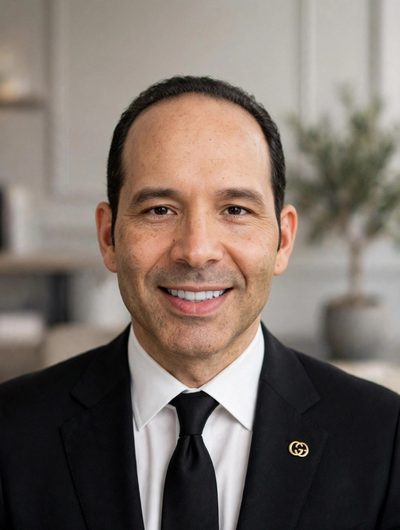 Written by Renan Filho, Technology & AI specialist. Expiry dates and activation fees are always visible.
Quick Answer: Prop trading firms let you trade with their capital. You pass an evaluation, then get funded. No personal risk beyond the challenge fee. For US traders, this is a direct path to significant income without a brokerage license. Here is your no-fluff guide to starting a funded trading career in 2024.
Key Facts for US Traders (2026)
| Market | Detail | Source |
|---|---|---|
| US indices | S&P 500, NASDAQ, Dow Jones | NYSE / NASDAQ |
| Regulator | CFTC (futures) / SEC (securities) | Official |
| Prop firm model | Funded evaluations with profit split 70-95% | Vendor terms |
| Verification | Updated regularly | PropFirmDiscountApp |
| Best deal today | Code DISCOUNTAPP — up to 90% off | Updated regularly |
How Prop Firm Challenges Actually Work
You pay a fee (usually $50 to $500) to take a timed challenge. You must hit a profit target (e.g., 8% to 10%) without exceeding a drawdown limit (e.g., 5% daily, 10% total). Pass both phases, and you get a live account. Profits split 70/30 to 90/10 in your favor. Payouts come monthly or bi-weekly. It is a merit-based system, not a loan.
Best Prop Firms for US Traders in 2024
Not all firms accept US residents. FTMO, Topstep, and Apex Trader Funding are the most reliable. FTMO offers up to $200k accounts with 80% profit split. Topstep is great for futures traders, with a 90% payout option. Apex has low fees and no time limits on challenges. Avoid firms with bad payout history. Check Trustpilot and Forex Peace Army first.
Cost vs. Reward: Is It Worth the Fee?
A typical $100k challenge costs $150 to $400. If you pass, you control $100k. Earning 5% monthly is $5,000 gross. Your split gives you $3,500 to $4,500. One bad month can cost you the fee, but one good month pays for 10 challenges. The math works if you have a consistent edge. Treat it like a business expense, not a gamble.
Common Rules That Kill Your Account
Most failures come from drawdown violations, not hitting targets. Daily loss limits (e.g., $2,000 on a $100k account) are strict. Overtrading and revenge trading are killers. News trading is banned by many firms. Also, you cannot hedge or use expert advisors without permission. Read the rulebook twice. One slip and your challenge is over.
Tax and Legal Side for US Traders
Prop firm payouts are taxable income. You will get a 1099-MISC or 1099-NEC from the firm. If you trade futures, you get Section 1256 treatment (60% long-term, 40% short-term gains). This lowers your tax rate. Keep records of all challenge fees and payouts. Consult a CPA who understands prop trading. The IRS does not treat it like a hobby.
Understanding the True Cost of a Prop Firm Challenge
The upfront price of a challenge is only the beginning. Most firms, like FTMO and MyForexFunds, charge a one-time fee (e.g., $99 for a $10,000 account, $540 for a $200,000 account), but the real cost is in the rules. A typical two-step evaluation requires an 8% profit target in Step 1 and a 5% target in Step 2, with a maximum daily drawdown of 5% (calculated on your starting balance or equity) and a trailing max drawdown of 10% from your initial balance. If you breach the daily loss limit—say, losing $500 on a $10,000 account in one day—you fail instantly, and your fee is gone. Many traders forget that the "refundable" fee is only returned upon passing, and some firms charge a 15-20% profit split on the first withdrawal, not the advertised 80-90%. Always factor in a buffer of at least 1% below the daily limit to avoid slippage-induced failures.
Payout Splits and Consistency Rules: What Traders Ask Most
New traders often ask, "How much can I actually withdraw?" The answer varies wildly. FTMO offers up to 90% profit split, but you must pass a 10% consistency rule—your best trading day cannot exceed 30% of total profit. For example, if you make $2,000 in a month on a $100,000 account, your largest day cannot be over $600. Topstep (a futures prop firm) uses a different model: a $50,000 account costs $165/month, with a $2,000 max trailing drawdown and a 50% profit split until you reach $10,000 in payouts, then it jumps to 80%. Meanwhile, The Funded Trader offers a 75% split on a $200,000 account, but charges a 5% "payout fee" and requires a minimum of 5 trading days before withdrawal. The key difference: firms like E8 Markets allow unlimited trading days, while others impose a 30-day minimum. Always verify whether the payout is on-demand (e.g., every 14 days) or restricted to a monthly cycle, as this affects your cash flow and risk management strategy.
The Real Cost of Getting Funded: A Transparent Breakdown
Most beginners only look at the headline discount DISCOUNTAPP, but the true cost involves more than the initial fee. A typical $100,000 account from a leading firm like FTMO or The5ers costs between $350 and $500 during a seasonal sale, but the full-price tag often hits $540. However, the hidden costs are in the add-ons. For example, a "profit split upgrade" to 90% (from a standard 80%) can add $99 to $150 to your purchase. Additionally, many firms charge a one-time activation fee (around $49) after you pass the first phase, and some require a monthly "platform fee" of $15–$25 if you use their proprietary dashboard. Notably, always check the refund policy: most firms offer a 100% refund of the fee upon your first successful payout, but only if you hit a minimum trading day count (often 5) and avoid a breach. Budget for a $50–$100 buffer for potential resets or extensions, as a single missed daily drawdown (typically 5% of the initial balance) can wipe out your progress without a paid reset.
FTMO vs. The5ers vs. E8: Which Model Fits Your Style?
Traders frequently ask which firm offers the "easiest" pass, but the real differentiator is the drawdown calculation and split structure. FTMO uses a 10% max loss on the initial balance (not trailing), which gives you breathing room, and offers an 80% split (up to 90% after a 10% profit target). The5ers, however, offers a "High Stakes" account with an 80% split but uses a *trailing* max drawdown of 6%—meaning your stop-loss moves up with your equity, making it stricter for swing traders. E8 Markets stands out with a 100% refundable fee and a 50% profit split on their "Starter" plan, but their daily loss limit is a tight 3% of the day's starting balance. In practice, a $50,000 account at FTMO requires a $2,500 profit target (5%) with a $5,000 max loss, while the same account at E8 needs $2,500 profit but only a $1,500 daily loss cap. For news traders, FTMO's relaxed weekend holding rules are a plus, whereas The5ers prohibits holding over the weekend on their "Hyper" plan. Choose based on your risk per trade, not just the split percentage.
Comparison Table
| Firm | Max Account | Profit Split | Challenge Fee (100k) | US Allowed |
|---|---|---|---|---|
| FTMO | $200k | 80% | $155 | Yes |
| Topstep | $150k | 90% | $165 | Yes |
| Apex Trader Funding | $300k | 90% | $163 | Yes |
| FundedNext | $200k | 80% | $149 | Yes |
| The5ers | $100k | 80% | $185 | Yes |
Frequently Asked Questions
Can I trade part-time with a prop firm?
Yes. Most firms have no minimum trading days, only minimum trading days (e.g., 10 days) in the challenge. You can trade 30 minutes a day.
What happens if I lose the prop firm's money?
You lose only the challenge fee. The firm absorbs the loss. You are not liable for losses beyond the fee.
Do I need a special broker account for prop trading?
No. The firm provides a funded account through their broker (e.g., FTMO uses FTMO Broker, Topstep uses Tradovate). You just log in and trade.
Can I withdraw profits anytime?
Most firms pay monthly or bi-weekly. Some allow early withdrawal after your first payout. Read the firm's payout policy carefully.
Are prop firms legal in the United States?
Yes, as long as the firm is not a broker-dealer. Prop firms are not regulated by the SEC like brokerages. They are legal because you trade the firm's capital, not your own.
Our Verdict
Prop trading is a real opportunity for US traders. Pick a solid firm like FTMO or Topstep. Follow the rules, manage risk, and treat it like a business. Start with a small challenge to test your strategy. When you pass, scale up. The capital is there. Your discipline is the only limit. Go get funded.
All firms · Today''s offers · FTMO vs Apex
All firms · Today''s offers · FTMO vs Apex
Discount DISCOUNTAPP and expiry dates are always shown before checkout. See how we rank firms on our methodology page.
PropFirmDiscountApp · Discount DISCOUNTAPP with expiry dates · See today's offers
Related Articles
Risk warning: Trading involves substantial risk of loss and is not suitable for every investor. Past performance is not indicative of future results. Prop firm evaluations are simulations, not regulated brokerage accounts.