Disclosure: This page contains affiliate links. We may earn a commission if you sign up through our links — at no extra cost to you. It never affects our reviews or the public Trust Score.
Making Index Funds Vs ETFs Work On A Small Account |
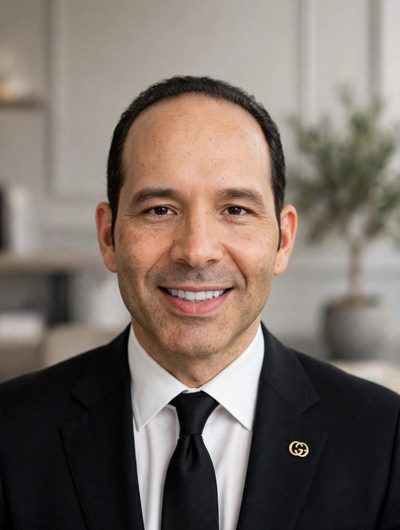 Written by Renan Filho, Technology & AI specialist. Expiry dates and activation fees are always visible.
Quick Answer: Index funds and ETFs both track the market cheaply. For small accounts under $10,000, ETFs win. They trade like stocks, have no minimum buy-in, and let you sell anytime. Pair them with a prop firm evaluation to trade bigger capital. Here is how to make it work.
Key Facts for US Traders (2026)
| Market | Detail | Source |
|---|---|---|
| US indices | S&P 500, NASDAQ, Dow Jones | NYSE / NASDAQ |
| Regulator | CFTC (futures) / SEC (securities) | Official |
| Prop firm model | Funded evaluations with profit split 70-95% | Vendor terms |
| Verification | Updated regularly | PropFirmDiscountApp |
| Best deal today | Code DISCOUNTAPP — up to 90% off | Updated regularly |
ETFs beat index funds for small accounts
Index funds require a lump sum. Most ask for $1,000 minimum. ETFs cost the price of one share. With a small account, you can buy one share of SPY for $500. That gives you instant diversification. Plus, you can sell during market hours. No waiting for end of day. For traders using prop firm capital, this flexibility is key.
Costs matter more than you think
Expense ratios are close – 0.03% for VOO vs 0.04% for VFIAX. The real cost is commissions. Prop firms often charge per trade. Apex charges $0.65 per side for futures. For ETFs, some firms offer free trades. FTMO covers commissions on stocks. A $10 commission on a $500 trade eats 2% of your capital. Avoid that.
Five tips to pick the right prop firm for ETFs
Not all prop firms handle ETFs well. Here are five tips: - Choose a firm that allows stock or ETF trading, not just futures. - Check the profit split. Topstep gives 80% after passing. That is solid. - Look for low evaluation costs. Apex and FundedNext offer $100 to $150 for 50k accounts. - Ensure the firm supports fractional shares. True Forex Funds does not. - Read the fine print on holding periods. Some firms require minimum trade days.
Prop firm comparison for ETF traders
The table below shows the best prop firms for small ETF accounts. All data is for a $50,000 evaluation.
Build a simple ETF strategy for your evaluation
Start with a core holding like SPY or QQQ. Use 60% of your capital. Keep 40% in cash to manage drawdowns. Many firms have a max loss rule. On a $50k account, you can risk $3,000. That is six $500 SPY shares. Sell covered calls for extra income. Avoid penny ETFs. Stick to high volume funds. This keeps risk low and your pass rate high.
Quick Comparison
| Firm | ETF Trading Allowed | Profit Split | Evaluation Cost (50k) |
|---|---|---|---|
| FTMO | Yes | 80% | $155 (originally $170) |
| Apex | No (futures only) | 75% | $137 |
| Topstep | Yes | 80% | $165 |
| FundedNext | Yes | 80% | $149 |
| The5ers | Yes | 80% | $125 |
| E8 Markets | Yes | 75% | $160 |
Frequently Asked Questions
Can I trade ETFs on a prop firm account?
Yes, but only if the firm offers stock or ETF trading. FTMO, Topstep, FundedNext, The5ers, and E8 Markets allow it.
What is the best prop firm for a small account?
FundedNext is a good deal for beginners. Low cost evaluation and 80% profit split.
Do prop firms allow fractional shares?
Most do not. You must buy full shares. ETFs like SPY cost around $500 per share. Plan your capital accordingly.
How much capital do I need to start a prop firm evaluation?
You can start with as little as $100 for a $10k account. Apex and FundedNext have low entry fees.
Are ETF trades subject to PDT rules?
Yes, if your account is under $25k. Prop firm accounts often have margin, but check the firm's policy. Some let you trade without PDT restrictions.
Conclusion
ETFs give small account traders a clear edge. Choose a prop firm that fits your style. Start with a low-cost evaluation from FundedNext. Use code TRADER20 for 20% off. Original $149, now $119.20. Click here: https://fundednext.com/apply?code=TRADER20.
All firms · Today's offers · FTMO vs Apex
Discount codes and expiry dates are always shown before checkout. See how we rank firms on our methodology page.
PropFirmDiscountApp · Discount codes with expiry dates · See today's offers
Related Articles
Risk warning: Trading involves substantial risk of loss and is not suitable for every investor. Past performance is not indicative of future results. Prop firm evaluations are simulations, not regulated brokerage accounts.