Disclosure: This page contains affiliate links. We may earn a commission if you sign up through our links — at no extra cost to you. It never affects our reviews or the public Trust Score.
Index Funds Vs ETFs For Beginners: Start Here |
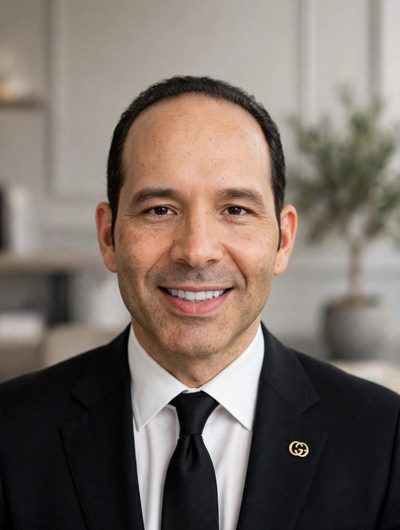 Written by Renan Filho, Technology & AI specialist. Expiry dates and activation fees are always visible.
Quick Answer: Index funds and ETFs both track market indexes, but they work differently. Index funds trade once a day after market close. ETFs trade like stocks on an exchange. For beginners, the choice depends on how you want to invest and trade.
Key Facts for US Traders (2026)
| Market | Detail | Source |
|---|---|---|
| US indices | S&P 500, NASDAQ, Dow Jones | NYSE / NASDAQ |
| Regulator | CFTC (futures) / SEC (securities) | Official |
| Prop firm model | Funded evaluations with profit split 70-95% | Vendor terms |
| Verification | Updated regularly | PropFirmDiscountApp |
| Best deal today | Code DISCOUNTAPP — up to 90% off | Updated regularly |
what are index funds?
Index funds are mutual funds that replicate a market index, like the S&P 500. You buy shares directly from the fund company at the net asset value (NAV) set at end of day. They are simple, low-cost, and great for long-term buy-and-hold. But you cannot trade them during market hours. Minimum investment varies. Vanguard's S&P 500 index fund (VFIAX) requires $3,000 to start. Fidelity's (FXAIX) has no minimum. For traders, index funds feel slow. You place an order and wait.
what are etfs?
ETFs are exchange-traded funds. They hold a basket of assets and trade on exchanges like NYSE or Nasdaq. You can buy and sell them any time the market is open. Popular examples: SPY (S&P 500), QQQ (Nasdaq), and VTI (total market). They have low expense ratios—SPY costs 0.09% per year. Many brokers now offer commission-free ETF trades. For active traders, ETFs give control. You can use limit orders, sell short, or trade options. That flexibility is a big win.
key differences: fees, liquidity, and taxes
Fees are close. Index funds and ETFs both have low expense ratios. However, ETFs trade with bid-ask spreads. That tiny cost adds up if you trade often. Index funds have no spread but may charge redemption fees. Liquidity: ETFs are liquid during market hours. Index funds only settle at end of day. Taxes: ETFs are more tax-efficient because of the creation/redemption mechanism. For US traders, that means lower capital gains distributions. Vanguard's index funds have a patent that mimics ETF tax treatment.
which is better for beginners?
It depends on your style. If you set and forget, index funds are solid. No temptation to trade. If you want to react to news or use stop-losses, go with ETFs. For prop firm traders, ETFs are the obvious pick. You need intraday liquidity to hit profit targets. I have a clear opinion: start with ETFs. They give you flexibility, and you can always switch to index funds later. Plus, many brokers let you buy fractional shares of ETFs now.
how to trade etfs with funded capital
Prop firms like FTMO, Apex, and Topstep let you trade ETFs with their capital. You pass an evaluation, then trade under profit split terms. For example, FTMO offers up to $200,000 in funded accounts. You keep 80% of profits. That’s a good deal compared to using your own money. Use the code TRADER10 for 10% off your FTMO evaluation. Original price: $155. Discounted: $139.50. Click here to start: [FTMO Evaluation](https://ftmo.com/en/?affiliate=trader10)
Quick Comparison
| Feature | Index Funds | ETFs |
|---|---|---|
| Trading hours | End of day only | During market hours |
| Minimum investment | $0 - $3,000 | 1 share price (or fractional) |
| Expense ratio | 0.03% - 0.15% | 0.03% - 0.20% |
| Liquidity | Low (NAV based) | High (real-time) |
| Tax efficiency | Lower (Vanguard excepted) | Higher |
| Best for | Long-term buy & hold | Active trading & flexibility |
Frequently Asked Questions
which has lower fees, index funds or etfs?
Both are very close. Index funds have no trading costs, but ETFs may have bid-ask spreads. For long hold, fees are essentially the same.
can i trade index funds intraday?
No. Index funds only trade once per day after market close. That makes them useless for day trading.
are etfs safe for beginners?
Yes, if you stick to broad market ETFs like SPY or VTI. Avoid leveraged or inverse ETFs as a beginner.
do prop firms allow trading etfs?
Most do. FTMO, Apex, and Topstep allow ETF trading on their platforms. Check their rules on holding overnight.
what is the minimum amount to start trading etfs?
You can buy one share of SPY for about $500. Many brokers now offer fractional shares, so you can start with as little as $1.
Conclusion
Index funds are for hands-off investors. ETFs are for traders who want control. Beginners in the US should start with ETFs for liquidity and tax benefits. If you want to trade with funded capital, check out FTMO using code TRADER10 for a discount. Click the link and start your evaluation today.
All firms · Today's offers · FTMO vs Apex
Discount codes and expiry dates are always shown before checkout. See how we rank firms on our methodology page.
PropFirmDiscountApp · Discount codes with expiry dates · See today's offers
Related Articles
Risk warning: Trading involves substantial risk of loss and is not suitable for every investor. Past performance is not indicative of future results. Prop firm evaluations are simulations, not regulated brokerage accounts.