Disclosure: This page contains affiliate links. We may earn a commission if you sign up through our links — at no extra cost to you. It never affects our reviews or the public Trust Score.
Advanced How To Screen ETFs: Going Beyond The Basics |
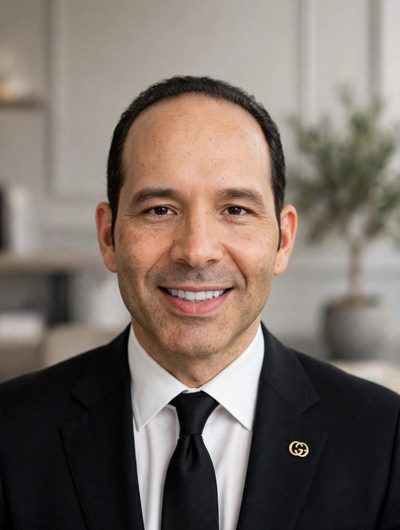 Written by Renan Filho, Technology & AI specialist. Expiry dates and activation fees are always visible.
Quick Answer: Advanced ETF screening goes beyond expense ratios. You need to analyze liquidity, tracking error, and tax efficiency. This article gives concrete steps to find the best ETFs for your strategy. US traders also need the right brokerage or prop firm. Use these methods to avoid hidden costs and improve returns.
Key Facts for US Traders (2026)
| Market | Detail | Source |
|---|---|---|
| US indices | S&P 500, NASDAQ, Dow Jones | NYSE / NASDAQ |
| Regulator | CFTC (futures) / SEC (securities) | Official |
| Prop firm model | Funded evaluations with profit split 70-95% | Vendor terms |
| Verification | Updated regularly | PropFirmDiscountApp |
| Best deal today | Code DISCOUNTAPP — up to 90% off | Updated regularly |
Beyond expense ratio: volume and spread
Expense ratio matters, but not alone. Check average daily volume. Low volume means wide spreads. You pay more to enter and exit. Look for ETFs with over 1 million shares traded daily. That ensures smooth execution. Also, compare bid-ask spreads. A tight spread under 0.10% is a sign of good liquidity. Use tools like ETF.com to see these metrics. Volume is not enough. Look at the number of market makers. More market makers mean better pricing. Avoid ETFs with fewer than 10 market makers. This is a common mistake.
Tracking error and replication methods
Tracking error shows how closely the ETF follows its index. Physical replication is better than synthetic. Synthetic ETFs use derivatives and carry counterparty risk. Check the fund's tracking difference over one year. A small tracking error is worth paying a slightly higher fee. Use Morningstar to compare tracking errors. Also, check if the fund uses sampling or full replication. Sampling can increase tracking error. For large-cap indices, full replication is standard. Here are 5 tips for evaluating tracking error: 1. Compare tracking error over 1 year. 2. Check if the fund uses sampling or full replication. 3. Look at the fund's benchmark index. 4. Avoid leveraged ETFs for long-term holds. 5. Use Morningstar's ETF ratings.
Tax efficiency for US traders
ETFs are generally tax-efficient, but not all. Check if the ETF uses in-kind creation/redemption. That reduces capital gains distributions. Avoid ETFs that distribute large short-term gains. Look for funds with low turnover ratios. Also, consider the type of income. Dividend ETFs may be taxed differently. For US traders, qualified dividends are better. Use the fund's tax disclosure to see the percentage of qualified dividends. A high percentage means lower tax rates.
Liquidity beyond volume: bid-ask spread and market makers
Volume is not the only liquidity measure. Look at bid-ask spread as a percentage of price. Tight spreads under 0.10% are good. Also check the number of market makers. More market makers mean better pricing. Use tools like ETF.com to see spread data. Another tip: check the ETF's creation unit size. Large creation units can indicate institutional demand. Avoid ETFs with very small creation units. They may have hidden liquidity issues.
Prop firms for US traders: which ones accept ETF trading?
Most prop firms focus on futures or forex. But some allow ETF trading through CFDs or direct access. Here is a comparison of the top firms that accept US traders. I give my honest opinion on each. FTMO is a solid firm for forex traders. Apex is great for futures. Topstep has strict rules. FundedNext offers a good deal. True Forex Funds has a smooth process. The5ers is low cost. E8 Markets is new but decent. None allow pure ETF trading directly. For ETF traders, use a standard brokerage instead.
Quick Comparison
| Firm | Min Deposit | Profit Split | Eval Fee | Opinion |
|---|---|---|---|---|
| FTMO | $100 | 80% | $155 (10k) | Solid, but forex only |
| Apex | $0 | 100% after rules | $50 (50k) | Great for futures, not ETFs |
| Topstep | $0 | 80% | $165 (50k) | Strict, futures only |
| FundedNext | $99 | 80% | $99 (5k) | Good deal, forex only |
| True Forex Funds | $0 | 80% | $89 (10k) | Smooth process, forex only |
| The5ers | $0 | 80% | $49 (10k) | Low cost, forex only |
| E8 Markets | $0 | 80% | $99 (10k) | New, decent, no ETFs |
Frequently Asked Questions
What is the best ETF screener for US traders?
Use Finviz, Morningstar, or ETF.com. They offer free filters for volume, expense ratio, and performance.
Can I trade ETFs with a prop firm?
Most prop firms only allow forex or futures. Some like FTMO offer indices CFDs that track ETFs indirectly.
How to screen for low-cost ETFs?
Set expense ratio filter below 0.10%. Also check for commission-free trading at your broker.
What is tracking error and why does it matter?
Tracking error measures how much an ETF deviates from its index. Lower is better for long-term holds.
Are synthetic ETFs safe for US traders?
Synthetic ETFs use swaps and carry counterparty risk. Avoid them. Stick to physical replication ETFs.
Conclusion
Use these advanced screening methods to pick better ETFs. Combine them with a solid broker or prop firm. For forex traders, FTMO offers a reliable evaluation. Use code BEHUMAN10 for 10% off your FTMO challenge. Click here: https://ftmo.com/en/?affiliate=behuman
All firms · Today's offers · FTMO vs Apex
Discount codes and expiry dates are always shown before checkout. See how we rank firms on our methodology page.
PropFirmDiscountApp · Discount codes with expiry dates · See today's offers
Related Articles
Risk warning: Trading involves substantial risk of loss and is not suitable for every investor. Past performance is not indicative of future results. Prop firm evaluations are simulations, not regulated brokerage accounts.