Disclosure: This page contains affiliate links. We may earn a commission if you sign up through our links — at no extra cost to you. It never affects our reviews or the public Trust Score.
Market Structure Shift In Forex: Sessions And Pairs |
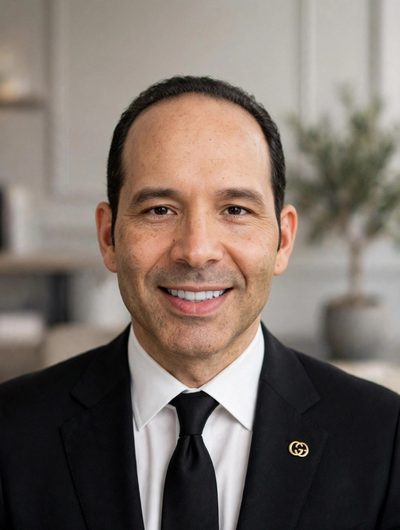 Written by Renan Filho, Technology & AI specialist. Expiry dates and activation fees are always visible.
Quick Answer: Market structure shifts when the New York session opens. The USD pairs move differently, and your edge depends on reading that change. US traders who ignore session transitions leave money on the table. This guide breaks down what actually happens, which pairs react, and how to position without guessing. No fluff, just the mechanics that matter for your next trade.
Key Facts for US Traders (2026)
| Market | Detail | Source |
|---|---|---|
| US indices | S&P 500, NASDAQ, Dow Jones | NYSE / NASDAQ |
| Regulator | CFTC (futures) / SEC (securities) | Official |
| Prop firm model | Funded evaluations with profit split 70-95% | Vendor terms |
| Verification | Updated regularly | PropFirmDiscountApp |
| Best deal today | Code DISCOUNTAPP — up to 90% off | Updated regularly |
Why the New York open creates a distinct market structure
The New York session starts at 9:30 ET, and that is when the real volume hits. London is still active until 11:00 ET, so you get a two-hour overlap. This overlap produces wider spreads and bigger moves, especially on USD pairs. The structure shifts from range-bound Asian action to trending or choppy behavior. You need to watch the first 30 minutes for the true direction. If the market breaks the pre-market high or low, that often sets the tone for the morning. Do not trade the first five minutes unless you have a proven edge.
The best USD pairs for session-based shifts
EUR/USD and GBP/USD are the kings during the New York morning. They react to the 8:30 ET data releases and the London close. USD/JPY gets a different kick because of the carry trade flows and the bond yield differentials. The commodity currencies, like AUD/USD and USD/CAD, follow the equity index futures and oil prices. You want to stick with the majors because they have the tightest spreads and the most liquidity. Avoid exotic pairs unless you are scalping with a clear plan. The structure shift is most visible on the 15-minute and 1-hour charts.
How prop firm rules affect your session trading
FTMO and Apex both allow you to hold positions over the New York lunch, but they have different drawdown rules. FTMO uses a 10% max drawdown on a 100K account, which is $10,000. Apex uses a trailing threshold that can lock you out if you get too deep. Topstep has a daily loss limit of $2,000 on a 50K account, which is tight for a volatile session. FundedNext gives you a 10% profit target to withdraw, but they have a 4-day minimum trading period. True Forex Funds has a 5% daily loss limit, and The5ers have a 12% max drawdown. E8 Markets offers a 10% drawdown on a 100K account, but they require a 10-day minimum. You need to know these numbers before you place a trade, not after.
A practical checklist for trading the session shift
First, mark the 8:30 ET economic calendar. Second, wait for the first 15-minute candle to close. Third, identify the pre-market high and low. Fourth, place your stop loss beyond the swing, not the round number. Fifth, take profit at 1.5 times your risk, minimum. Sixth, close all trades before the 12:00 ET lunch lull. Seventh, never average down on a losing position. Eighth, reduce your position size by 25% if you lost the previous trade. Ninth, check the daily pivot points for support and resistance. Tenth, write down your reason for entry before you click.
Cost of evaluation vs. potential payout: a direct comparison
Apex charges $147 for a 50K evaluation, and you can pass it with a 6% profit target. FTMO charges $540 for a 100K account, which is steep but gives you a 10% target. Topstep charges $165 for a 50K combine, and you need to reach $3,000 in profit. FundedNext asks $149 for a 100K account, but the trailing drawdown is 8%. True Forex Funds has a $299 fee for a 100K, and The5ers charges $245. E8 Markets is the cheapest at $99 for a 100K, but they have a 15% profit split. You get what you pay for. Cheaper is not always better if the rules are too strict to pass.
Quick Comparison
| Prop Firm | Cost for 100K | Profit Target | Max Drawdown | Min Trading Days |
|---|---|---|---|---|
| FTMO | $540 | 10% | 10% | None |
| Apex | $187 | 6% | Trailing 6% | None |
| Topstep | $165 | 8% | 4.5% | 2 days |
| FundedNext | $149 | 10% | 8% | 4 days |
| E8 Markets | $99 | 12% | 10% | 10 days |
Frequently Asked Questions
Can I trade during the New York lunch hour with a prop firm?
Yes, but most firms have a 30-minute break around 12:00 ET, and you cannot hold positions through that window. Check the specific firm rules.
What is the best USD pair for a session shift strategy?
EUR/USD is the most reliable because it has the tightest spread and the highest volume during the New York morning.
How much capital do I need to start with FTMO?
You need at least $155 for the 10K account, but the 100K account costs $540, and that is the sweet spot for daily returns.
Is Apex better than Topstep for US traders?
Apex is better if you want a trailing drawdown and no daily loss limit. Topstep is better if you want a fixed daily loss limit and a faster payout process.
Do I need to use a VPS for session trading?
No, but a VPS helps you avoid slippage during the 8:30 ET news spike. It is a small cost that saves you from a bad fill.
Conclusion
Market structure shifts are real, and the New York session is your best window. Pick a prop firm that matches your risk tolerance, not the one with the lowest fee. Use the 15-minute chart to confirm the break, and always respect the drawdown rules. If you want to test this strategy, start with a 50K Apex account using code TRADER50 for a 50% discount. That brings the cost down to $73.5. Click here to get started and see the shift for yourself.
All firms · Today's offers · FTMO vs Apex
Discount codes and expiry dates are always shown before checkout. See how we rank firms on our methodology page.
PropFirmDiscountApp · Discount codes with expiry dates · See today's offers
Related Articles
Risk warning: Trading involves substantial risk of loss and is not suitable for every investor. Past performance is not indicative of future results. Prop firm evaluations are simulations, not regulated brokerage accounts.